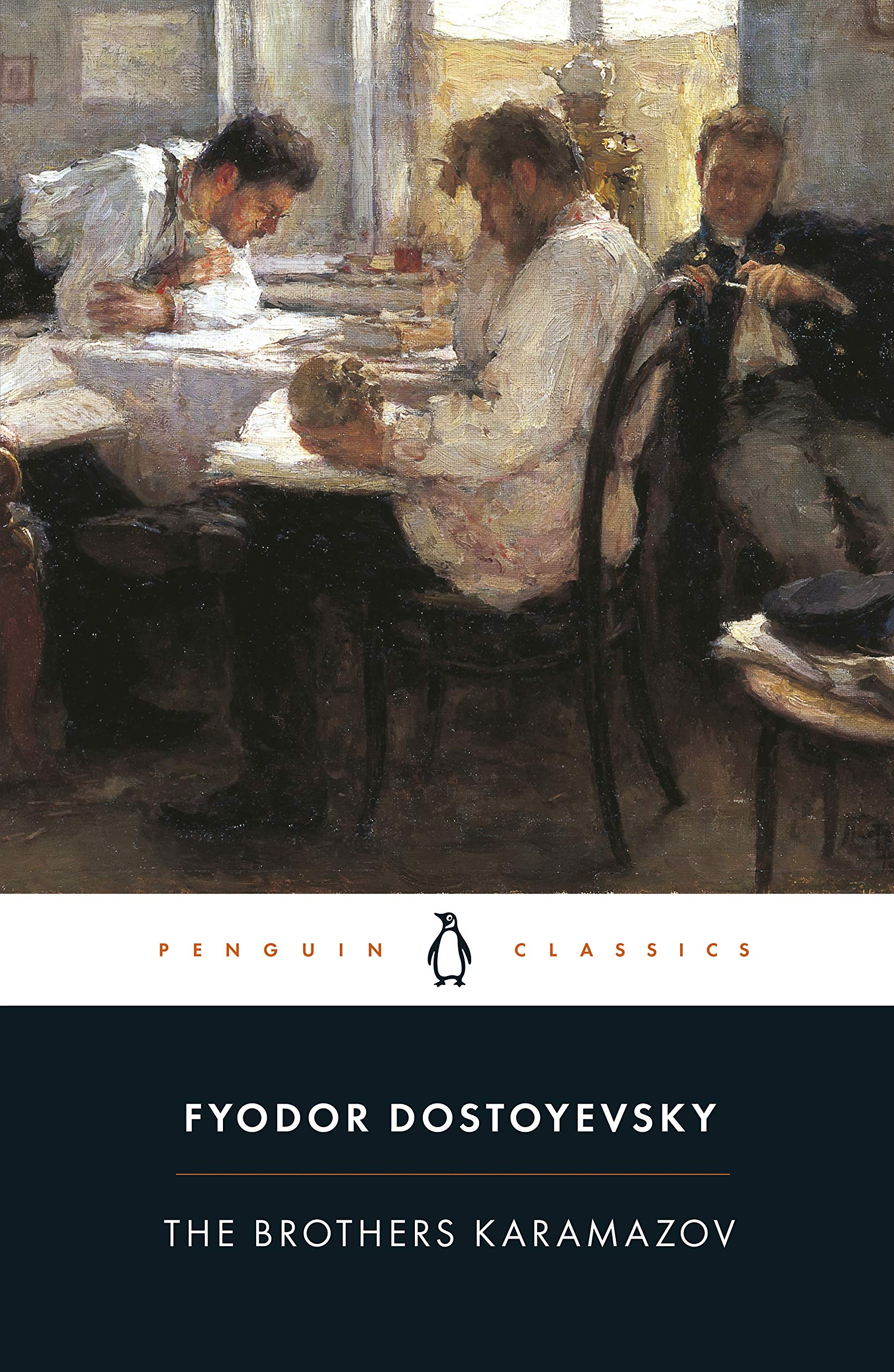
The Brother Karamazov is the final novel written by Fyodor Dostoevsky, which as the title suggests is the story of Fyodor Pavlovich Karamazov and his three sons and possibly an illegitimate brother. The novel is lengthy flowing over a thousand pages, and if the rumors are true there was also a sequel in the making. But the novel is somewhat complete on its own. But I personally would have loved to see more of what transpired in the lives of the brothers. At least sort of like an epilogue. May be Dostoevsky saved it for the sequel, he never got to write.
Writing style has all the repeating tropes of Dostoevsky like long monologues, high level philosophical discourse, delirious characters etc. The book was scattered with deep insights into the human psyche and Dostoevsky's own defenses against Atheism, Progressivism and socialism. Even at times defenses against Catholicism or what he perceived to be Catholicism.
The poem inside the Novel: "The Grand Inquisitor" was something unexpected and quite remarkable. I'm sad I couldn't savor it in it's glory that is in Russian, because I don't know Russian. But still it was a haunting and unsettling read. I would like establish his criticism and harsh words to totalitarianism that threatens religious harmony rather than anything else. If it is a Catholic criticism or a Jesuit Criticism, as many have claimed it is, I think it turns out to be one made of straw man. But it is a strong example of how a person who is bathes in religion and God can rise up on the other end of a spectrum by influence of an infectious and irresistible thought or idea.
The story was great but what made it even great was Dostoevsky's usual nuances in the characters, elaborate explanations of their motivations, schemes, how they feel about the world. and their relationship to other characters. All of these elements make story a comprehensive read.
Psychological insights in the novel are only rivaled by the religious/moral insights from the book. Dostoevsky's understanding of God, i.e. Christ is unparalleled from any classic author I have read. That really made me smile. Because the direct way in which he expressed his love for Christ and knowledge about his faith was surprising, atypical and heartening.
I felt all the feelings when I read the book. Sometimes the book made me jump with happiness, sometimes my eyes filled up, sometimes my heart cried "awww", sometimes I felt like punching some characters, sometimes I was inspired, sometimes disappointed, sometimes I cried out with triumph and sometimes I just wanted to hug and console my character.
So overall a great read; a must read if I may. I know I didn't go into the themes explored in this novel. But if I do that it is sure that it will spoil the novel. To read my insights about the themes in the Novel I invite you to follow my blog the bookopinionist.com
Comments
Post a Comment